When one person knows every refill, ride, appointment, and follow-up, the first job is not to ask the family to "help more." It is to move the work out of that person's head and into a place where other people can actually take ownership of it.
Why the load ends up on one person
Usually the role forms by accident. Sofia lives closest, so she drives to the first appointment. The clinic starts calling her. Her brother asks her what time the follow-up is. Her aunt texts her when a prescription needs picking up. After a few months, Sofia is not just doing tasks. She is the family index.
That setup makes every helper depend on the same person for instructions. Even willing relatives cannot take over work they cannot see.
The problem is not always a shortage of helpers. Sometimes it is a shortage of visible, claimable work.
How to spread the load across the team
Start with the next seven days, not the whole care plan. Write down the actual actions: refill the prescription, drive Thursday, call the insurance office, bring dinner Saturday, confirm the follow-up.

Attach one person to each action that already has an owner. Leave the genuinely unclaimed ones open for someone to take. Add a date when timing matters.
Then stop using Sofia as the status desk. If Daniel takes the pharmacy run, he marks or reports it in the shared place. If Thursday's driver changes, update the action there. If a new task appears, put it where the team can see it before asking Sofia to remember one more thing.
A helper can only pick up work that has been made visible.
Where Coach fits in
Care coordination is not only logistics. A confusing note or unfamiliar term can create another handoff problem: one person understands it, everyone else waits for the explanation.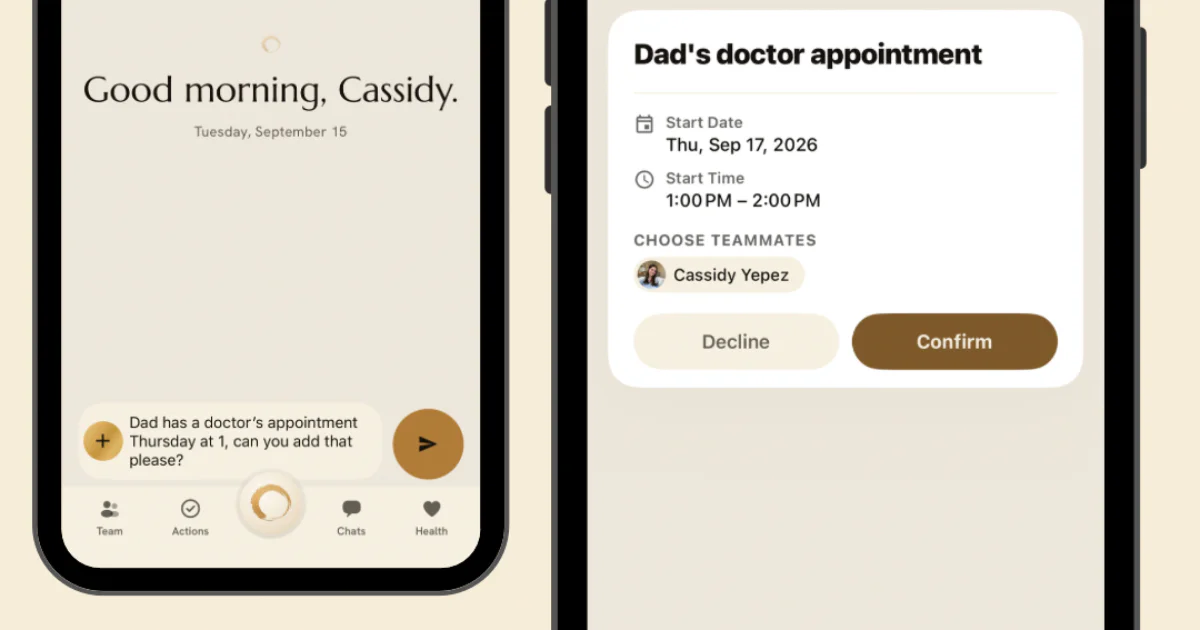
Coach can answer care-related questions and help turn guidance into actions, according to the current App Store listing. The HomeTeams site also describes Coach translating medical language into plain English and summarizing what the team has handled.
That does not replace the clinician or the legal decision-maker. It gives the family another way to organize what they already need to understand and do.
Understanding belongs in the shared plan when the next action depends on it.
What actually changes
The useful change is easy to see. Instead of Daniel texting "What do you need me to do?", he sees that Saturday dinner is open and takes it. Instead of three people asking Sofia whether the refill happened, the action shows who owns it. Instead of Sofia recapping the whole week to an aunt who was traveling, the aunt can catch up from the shared record.
The family may still divide the work unevenly. That is normal. The goal is not equal hours. The goal is to stop making one person the only map of the territory.
Shared visibility makes uneven work discussable instead of invisible.
A note on where to start
Choose three recurring jobs that currently depend on one person's memory. Refills, rides, and follow-up calls are enough. Put those into a shared system, name the owner, and let the family practice using that source before adding more.
If your family wants one place to build the team, assign actions, message teammates, and catch up on what has been handled, start at hometeams.io.