Families stay aligned by making the work visible. They name who owns each responsibility, keep current information in one place, attach real people to actions, use reminders to support the plan, and make it possible for someone to catch up without asking for a private recap.
Name roles instead of assuming them
If Maya is the clinic contact, say so. If Luis handles weekday rides, say so. If Priya keeps the current insurance and medical paperwork organized, say so.
Roles do not need formal titles. They need to answer the question “Who carries this kind of handoff?”
A role that only exists in everyone's assumptions is not a role the family can rely on.
Keep communication in one place
A changed appointment should not be in one person's voicemail, another person's text thread, and a third person's memory.
Choose one place where the current update lives. The family can still talk elsewhere, but the information somebody may need tomorrow should have one dependable home.
The best communication system is the one a late-arriving teammate can actually search.
Put tasks on a shared plan with real owners
“Someone should call the clinic” is not an assignment. “Daniel calls the clinic Tuesday morning” is.
Attach one person to the action. Add a date when timing matters. If the work is flexible, leave it open until someone takes it rather than inventing a deadline that has no purpose.
Visible ownership turns willingness into a handoff.
Let reminders support the plan
A reminder is useful when the person already knows what they own. It should point them back to the action, not become another stream of vague alerts.
If Daniel owns the Tuesday call, a reminder can nudge Daniel. The family coordinator should not need to text him separately “just in case.”
A reminder should reinforce responsibility, not replace it.
Make room to catch up without asking anyone to repeat themselves
People miss days. They travel, work late, get sick, or step away from the family thread for a weekend.
Give them a way to see what was handled and what is still open. If Priya comes back Monday, she should be able to find the completed pharmacy run, the changed Thursday appointment, and the one unclaimed grocery action without asking Maya to reconstruct the weekend.
A team that can catch up on its own is easier to hand off.
How HomeTeams supports these habits
You can build a team in HomeTeams, create and assign actions, message teammates one-to-one or in groups, and keep shared resources available to the people you choose. The site also describes reminders and updates that arrive automatically, plus Coach summaries of what the team has handled.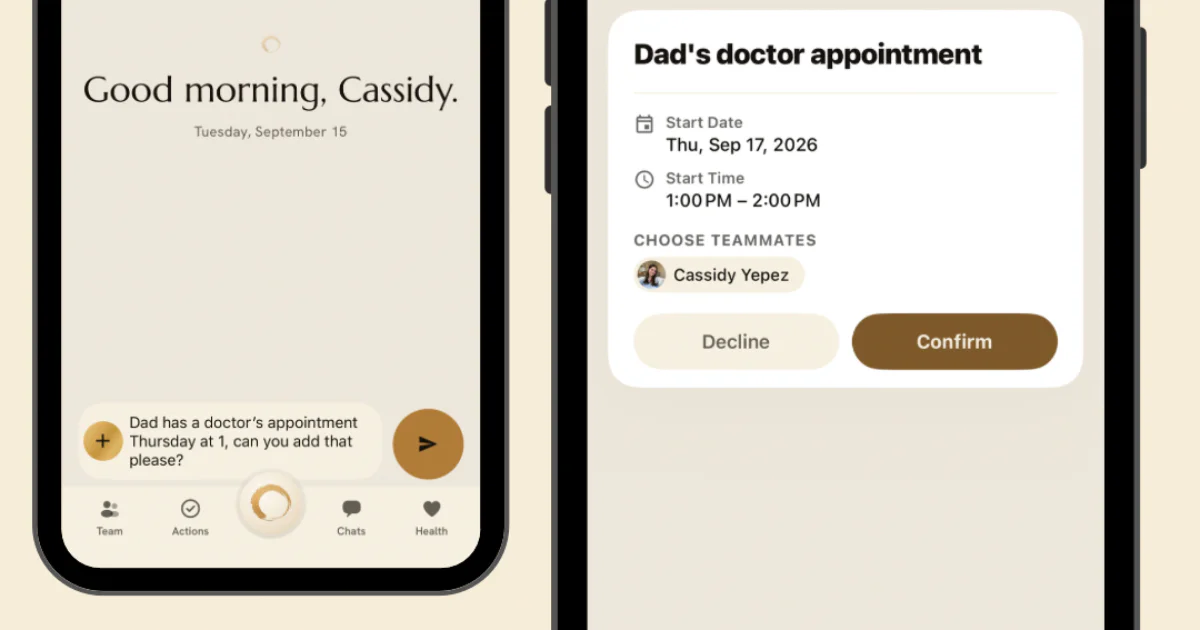
Those features map to the habits above, but the habits matter more than the app. If the family does not name owners or keep the current version in one place, no feature list can do that thinking for them.
Use the tool to hold the habit, not substitute for it.
Building these habits when you're starting from scratch
Start with the habit causing the most confusion this week. If everyone keeps asking about rides, fix ownership and the shared schedule. If the main coordinator repeats the same update five times, fix the shared communication home. If people return after a few days and need a custom recap, fix catch-up.
Do not install five new rules at once. Make one behavior normal, then add the next.
Test the system on a normal Tuesday
Mom has an appointment at 10:00. Luis drives. Maya needs to call the clinic afterward. Priya was away Monday and wants to know what changed. The grocery action is still open.

Can each person see their part without starting another family meeting? If yes, the habits are working. If no, the missing answer tells you which habit needs attention next.
If your family wants one place to hold those habits, start at hometeams.io.